

Blog
News, tutorials, tips and tricks

October 22, 2019
Metagenomic analysis of microbial communities with OmicsBox
In this use case we will use the metagenomics tools included in OmicsBox to analyze the microbial communities of two different soda lakes from Brazil.
July 29, 2019
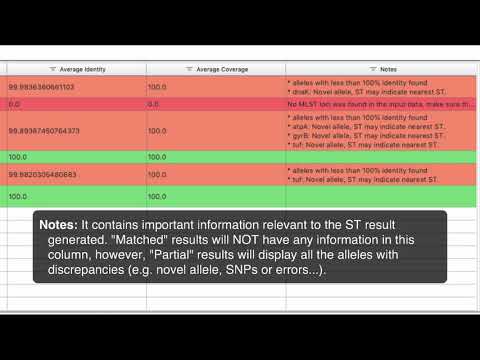
Multilocus Sequence Typing MLST Analysis Tool
The Multilocus Sequence Typing Analysis Tool of OmicsBox (MLST) is a nucleotide sequence-based approach of characterizing isolates of bacterial species using the sequences of internal
May 27, 2019
Introducing the BioBam account
Get a brief summary on how a BioBam account will help you to manage your services and payments all by yourself.

March 6, 2019
Interview with Mariana Monteiro
Interview with Mariana Monteiro, a Bioinformatician, Sales and Customer Manager at BioBam. What I value the most about BioBam is that it is a very
August 8, 2018
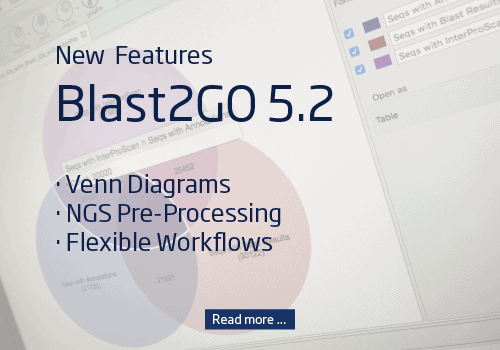
Release Version 5.2
(Release Date: 02/08/2018) We are happy to announce that Blast2GO 5.2 has now been released. This update makes our bioinformatics tool for straightforward functional genomics even
April 7, 2017
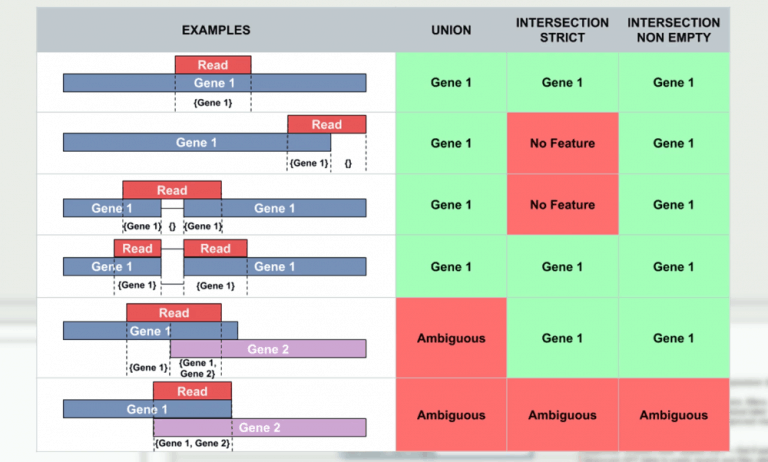
Expression Quantification at Gene-Level
The “Create Count Table” feature of OmicsBox/Blast2GO allows quantifying the gene expression of RNA-seq datasets. This video shows step-by-step how to create a count table of
March 16, 2017
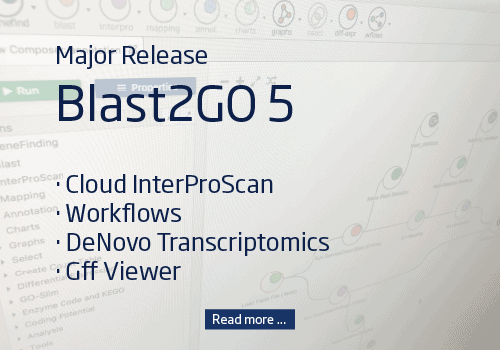
Release Version 5
Release Date: 13/01/2018) Just in time for the PAG Plant & Animal Genome Conference, we launched Blast2GO 5! This major release brings many new features.
March 15, 2017
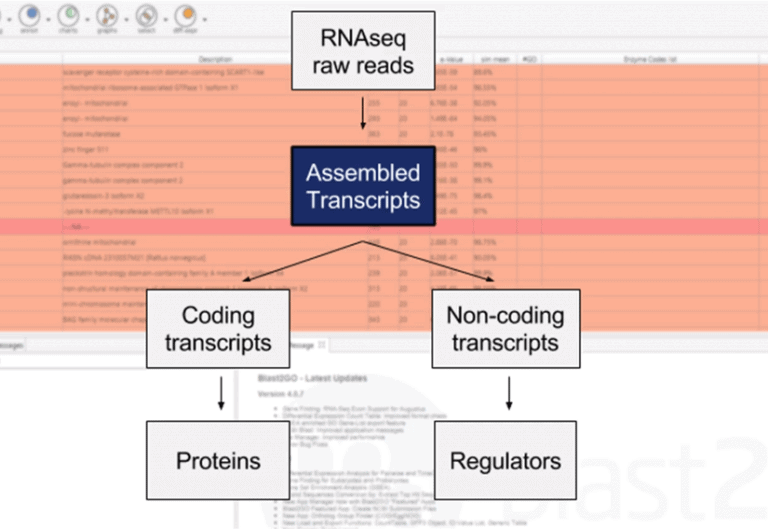
Coding Potential Assessment Tool
This video shows how to use the ‘Coding-Potential Assessment Tool’ which allows distinguishing the coding transcripts from the non-coding transcripts. This can be achieved using
November 16, 2016
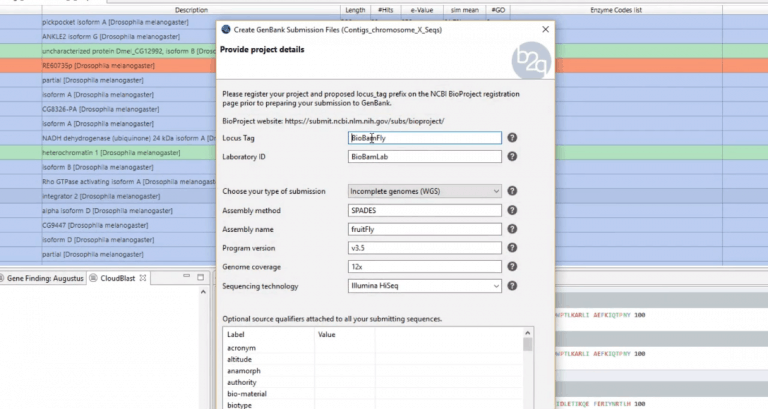
NCBI GenBank Submission
This video shows how to use the ‘Create NCBI GenBank Genome Submission Files’ tool which allows to generate all files (e.g. the Asn1 (.sqn) file)