At Biobam, we are always proud to see how researchers use OmicsBox to support their scientific discoveries. It is especially rewarding to see our software contributing to high-impact research and helping scientists transform complex omics data into meaningful biological insights. In this blog post, we are pleased to share the experience of Oladapo Fagbohun, a researcher in the Center for Agriculture and Natural Sciences at Wilmington College, from his own words:
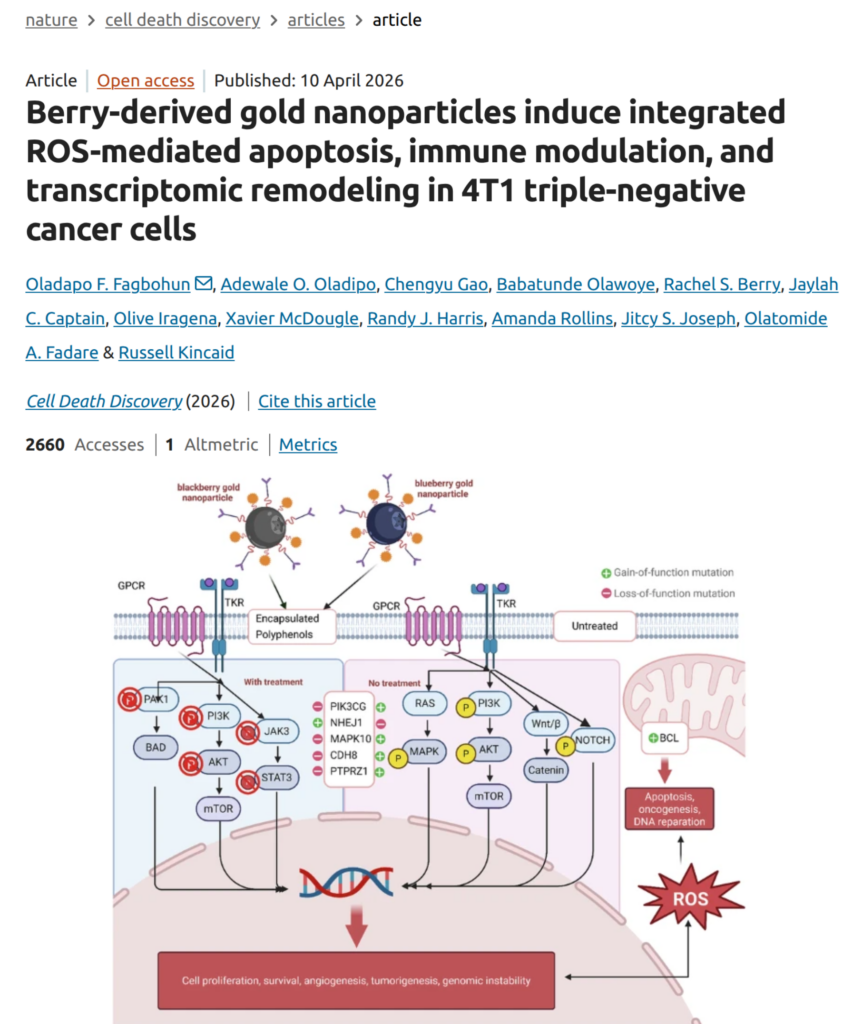
In our recently published study, “Berry-derived gold nanoparticles induce integrated ROS-mediated apoptosis, immune modulation, and transcriptomic remodeling in 4T1 triple-negative cancer cells” (Cell Death Discovery, 2026), we undertook a comprehensive multi‑omics investigation to characterize how functionalized gold nanoparticles modulate genomic stability, signaling networks, and apoptotic pathways in triple‑negative breast cancer (TNBC) cells. This project required the integration of whole‑genome sequencing, bulk RNA‑seq, differential expression analysis, functional enrichment, and pathway‑level interpretation.
Throughout this process, OmicsBox played a central and indispensable role in enabling efficient, reproducible, and biologically meaningful analysis of our high‑dimensional datasets.
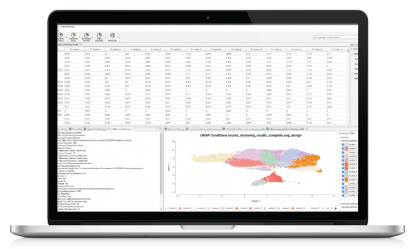
One of the most valuable aspects of OmicsBox in this project was its intuitive, end‑to‑end workflow for RNA‑seq analysis, which allowed us to seamlessly transition from raw sequencing reads to biologically interpretable results. After generating high‑depth transcriptomic data on the Illumina NovaSeq X and NextSeq platforms, we imported our gene count matrices into OmicsBox for quality control, normalization, and differential expression analysis. The platform’s DESeq2‑based implementation provided a streamlined environment for identifying robust sets of differentially expressed genes (DEGs) between nanoparticle‑treated and untreated 4T1 cells. Because our study focused on the interplay between ROS‑mediated apoptosis, immune modulation, and transcriptional reprogramming, the ability to rapidly filter, visualize, and statistically validate DEGs was essential. OmicsBox’s interactive volcano plots, PCA clustering, and heatmap tools allowed us to quickly assess sample relationships and treatment‑specific transcriptional signatures, ensuring that our downstream analyses were grounded in high‑quality, biologically coherent data.
“Another major advantage of OmicsBox was its support for multi‑omics analysis, which was essential for a study that combined genomic, transcriptomic, proteomic, and functional assays.”
Beyond differential expression, functional annotation and enrichment analysis were among the most critical components of our study, and OmicsBox excelled in this domain. Using the platform’s Gene Ontology (GO) and pathway enrichment modules, we were able to contextualize thousands of DEGs within broader biological processes, molecular functions, and cellular components. This was particularly important given the complexity of the pathways modulated by berry‑derived gold nanoparticles. For example, OmicsBox helped us uncover positive enrichment of DNA repair regulators and TGF‑β signaling, alongside negative enrichment of cadherin, cell adhesion, and MAPK‑related pathways. These findings aligned with our phenotypic observations of reduced metastatic potential, suppressed EMT, and enhanced apoptotic signaling. The ability to integrate GO terms, KEGG pathways, and Reactome modules within a single analytical environment significantly accelerated our interpretation of the transcriptomic landscape and strengthened the mechanistic conclusions presented in the paper.
“The clarity and depth of the bioinformatic results generated through OmicsBox strengthened the mechanistic claims of the paper and contributed significantly to its acceptance in a high‑impact journal.”
Another major advantage of OmicsBox was its support for multi‑omics analysis, which was essential for a study that combined genomic, transcriptomic, proteomic, and functional assays.Our whole‑genome sequencing revealed millions of SNVs and hundreds of thousands of indels affecting key tumor suppressor genes such as TP53, BRCA2, BARD1, CDH1, NF1, and CHEK2. OmicsBox facilitated the annotation and functional prediction of these variants, enabling us to link genomic alterations to transcriptomic dysregulation and protein‑level signaling changes. By leveraging OmicsBox’s variant annotation tools and its integration with external databases, we were able to identify conserved motifs disrupted by mutations and assess their potential impact on DNA repair, apoptosis, and oncogenic signaling. This multi‑layered approach allowed us to construct a cohesive narrative connecting genomic vulnerabilities with treatment‑induced transcriptional remodeling.
The platform’s ease of use and reproducibility were also essential for training undergraduate researchers who contributed to the project. As a faculty member working with students at various levels of computational experience, I found OmicsBox to be an ideal teaching and research tool. Its graphical interface, modular workflow, and clear documentation allowed students to participate meaningfully in RNA‑seq analysis, GO enrichment, and data visualization. This not only accelerated our research progress but also provided valuable experiential learning opportunities for students, many of whom were co‑authors on the publication. The ability to export workflows, maintain version control, and generate reproducible reports ensured that our analyses met the rigor required for peer‑reviewed publication.
Finally, OmicsBox supported the translational impact of our study by enabling us to identify therapeutically relevant pathways modulated by berry‑derived nanoparticles. Through its enrichment and pathway‑mapping tools, we were able to highlight the suppression of PI3K/AKT/mTOR and JAK/STAT signaling, the activation of caspase‑dependent apoptosis, and the modulation of immune‑related transcription factors. These insights were central to demonstrating the therapeutic potential of functionalized gold nanoparticles as delivery platforms for dietary polyphenols in TNBC. The clarity and depth of the bioinformatic results generated through OmicsBox strengthened the mechanistic claims of the paper and contributed significantly to its acceptance in a high‑impact journal.
“OmicsBox not only accelerated our research but also enhanced the rigor, reproducibility, and interpretability of our findings.”
In summary, OmicsBox was instrumental in every stage of our multi‑omics workflow, from raw data processing to functional interpretation and manuscript preparation. Its powerful analytical tools, user‑friendly interface, and capacity for multi‑omics analysis made it possible to uncover complex biological insights that would have been far more difficult and time‑consuming to achieve using fragmented or code‑based pipelines alone. OmicsBox not only accelerated our research but also enhanced the rigor, reproducibility, and interpretability of our findings. It has become an essential component of our laboratory’s computational toolkit, and it played a major role in the successful completion and publication of this study.